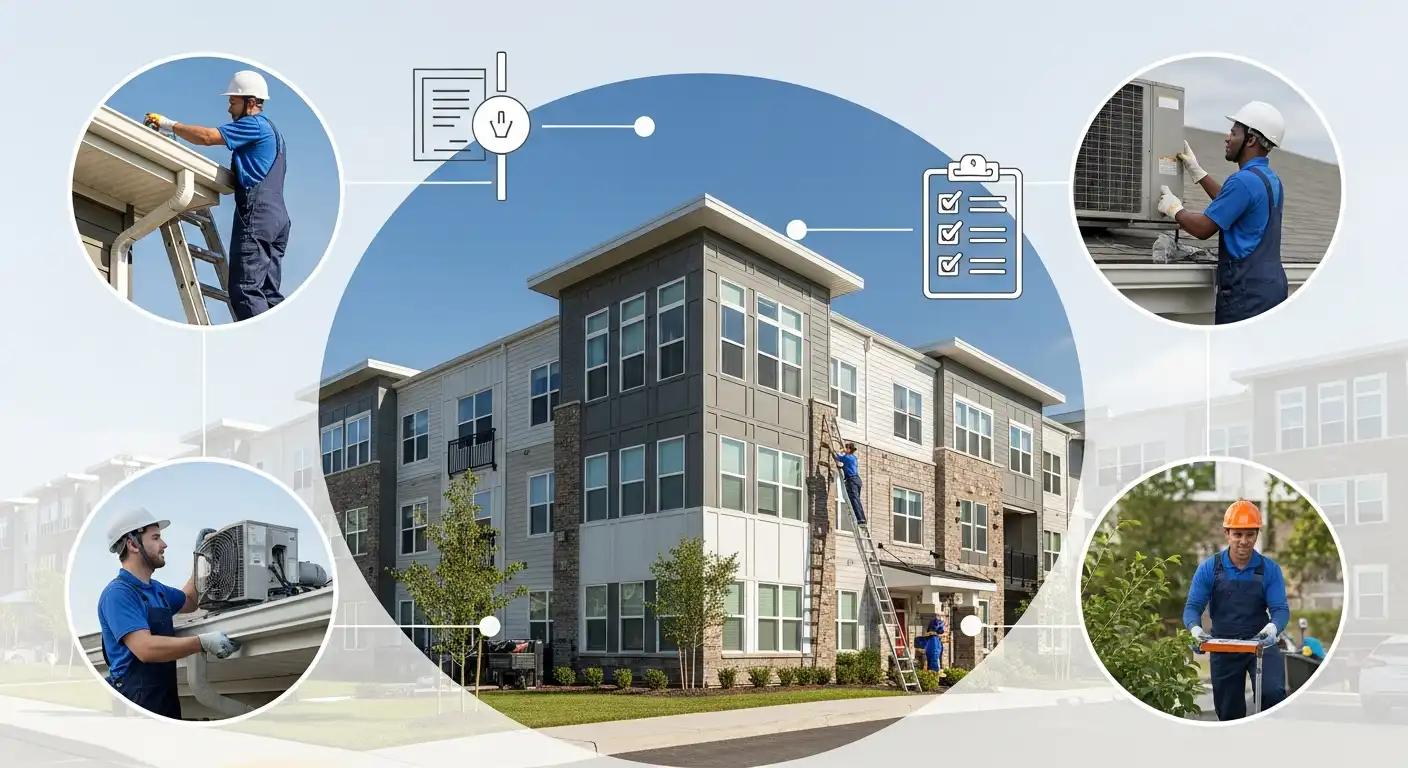
Multi-tenant buildings put unusual pressure on heating and cooling systems. One floor may run a law office with steady daytime traffic, while another has a fitness studio, medical suite, or retail tenant with longer hours. Routine inspection protects rent income, tenant comfort, energy costs, and the building’s reputation.
Plan inspections before tenants start sending hot and cold complaints. Property managers get fewer surprises, cleaner records, and a better case when budgets come up.
Why Multi-Tenant HVAC Needs Extra Attention
Different lease terms, occupancy patterns, zones, and thermostat habits can push the same system in several directions at once. Regular inspection helps answer practical questions:
- Are common areas and tenant suites receiving balanced airflow?
- Are filters, belts, coils, and drains being handled on schedule?
- Are repairs documented before they become lease disputes?
- Is the equipment still a good fit for the building’s current use?
This is where professional commercial hvac service repair becomes an operations tool, not just an emergency call after a breakdown.
Inspection Areas That Should Stay on The Calendar
| Inspection Area | What Technicians Check | Why It Matters |
|---|---|---|
| Filters and airflow | Dirty filters, blocked returns | Reduces strain and complaints |
| Coils | Dirt, corrosion, bent fins | Supports heat transfer |
| Belts and motors | Wear, tension, vibration | Catches stress early |
| Thermostats | Calibration, schedules, sensors | Prevents uneven temperatures |
| Condensate drains | Clogs, standing water | Lowers leak risk |
| Refrigerant circuit | Pressures, temperatures, leaks | Protects cooling capacity |
| Electrical parts | Contactors, wiring, voltage | Reduces shutdowns |
| Rooftop units | Panels, economizers, seals | Protects exposed equipment |
Rooftop Units Need A Closer Look
Many multi-tenant buildings rely on rooftop units because they save interior space and can serve separate zones. They also sit in heat, rain, wind, leaves, and winter weather year after year. Out of sight should not mean out of mind.
During rooftop inspections, technicians should check cabinet panels, fan assemblies, economizer operation, drain lines, electrical compartments, gas connections, and signs of water intrusion. A loose panel may seem minor until it rattles all night above a tenant’s conference room.
Controls Can Make or Break Comfort
The controls side is often where tenant frustration begins. A unit may be mechanically sound, yet the space still feels wrong because the schedule is off, a sensor sits in direct sunlight, or tenants keep changing settings.
For multi-tenant properties, controls should be reviewed for:
- Start and stop times that match occupancy
- Temperature setbacks after hours
- Sensor accuracy
- Locked or limited thermostat ranges
- Overrides that were never reset
When walls move and new rooms appear, airflow may need rebalancing. In some cases, a larger change calls for commercial hvac installation planning instead of repeatedly patching a system that no longer fits the space.
Maintenance Records Protect the Property Manager Too
Good records are not busywork. They help show that the owner or manager acted responsibly, especially when a tenant says the HVAC system has been ignored. Inspection reports should note findings, photos, recommended repairs, completed work, filter dates, and equipment readings.
A simple service log can also help with capital planning. If the same compressor, blower motor, or control board keeps appearing in reports, you have a stronger case for replacement.
Seasonal Timing for Inspections
| Season | Best Focus | Smart Manager Move |
|---|---|---|
| Spring | Coils, refrigerant, drains | Book before the first heat wave |
| Summer | Runtime, comfort, condensate | Track hot spots by suite |
| Fall | Heating safety, burners, controls | Test heat before cold weather |
| Winter | Belts, motors, freeze risks | Watch vacant suites |
A consistent commercial hvac maintenance plan gives managers a cleaner rhythm. Instead of reacting to every complaint as a fresh crisis, you can compare current conditions with past readings and spot changes faster.
Signs It Is Time to Schedule Service Now
Call a commercial HVAC technician if you notice:
- Different temperatures in nearby spaces
- Unusual odors, rattling, grinding, or short cycling
- Water stains near ceiling tiles or mechanical areas
- Utility bills rising without a clear reason
- Equipment running longer than usual
- Poor airflow in interior offices or conference rooms
What to Ask Before Hiring A Commercial HVAC Contractor
Before signing a service agreement, ask how the contractor handles multi-tenant buildings. The right team should understand scheduling, tenant access, rooftop safety, documentation, and communication with property managers.
Useful questions include:
- Will you provide written inspection reports with photos?
- Can you service rooftop units, boilers, heat pumps, cooling towers, and split systems?
- Do you offer planned maintenance agreements?
- How do you handle after-hours calls?
- Can you help prioritize repairs by urgency and budget impact?
The cheapest visit is not always the best value. Multi-tenant properties need a contractor who can prevent repeat disruptions and explain repair choices clearly.
Next Step for Property Managers
A regular HVAC inspection gives property managers a clearer view of system condition, repair priorities, and tenant comfort issues before they turn into bigger problems. For multi-tenant buildings, that kind of planning can make service calls less disruptive and budgeting more predictable.
Climico can help review your building’s commercial HVAC needs and recommend practical next steps based on the equipment, usage, and condition of the property.
About the Author