
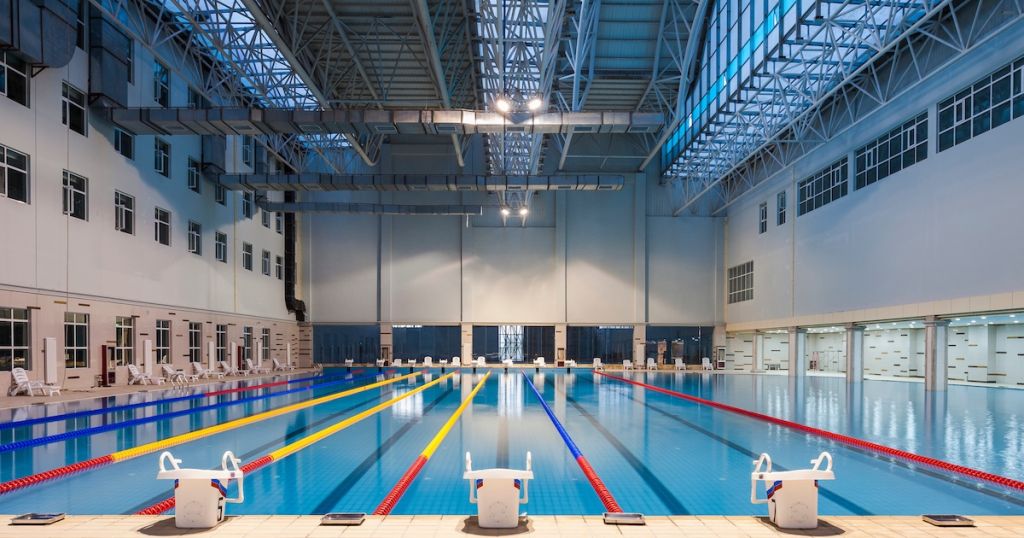
A strong “chlorine” smell in an indoor pool room means the air is carrying used-up chlorine byproducts, not that the pool is extra clean.
Chlorine reacts with sweat, oils, lotions, urine, dirt, and swimmer debris. That reaction can create chloramines. Some stay in the water. Some move into the air when swimmers churn the surface, spa jets bubble, or water features spray.
Outdoors, wind dilutes the odor. Indoors, the room depends on mechanical design. That’s where HVAC becomes part of pool operation.
The smell is usually dirty air, not strong sanitation
A clean, well-run pool room shouldn’t knock you back at the door. A sharp chemical smell often points to combined chlorine and weak air removal near the waterline.
Pool chemistry still matters. Operators need the right free chlorine level, pH control, filtration, swimmer hygiene rules, and regular testing. Yet water treatment can’t fix stagnant air. If chloramines leave the water and sit above the pool surface, swimmers breathe them before exhaust gets a chance.
That is why complaints often come from lap swimmers, coaches, lifeguards, and parents sitting close to deck level.
What does HVAC actually do in a pool room?
An indoor pool room is a warm, humid space that releases vapor and airborne contaminants all day. Standard comfort cooling often struggles here.
A pool HVAC system has to control humidity, air temperature, ventilation, and exhaust at the same time. Good design moves fresh supply air across the pool surface, pulls contaminated air out, protects glass and steel from condensation, and avoids energy waste.
| Symptom in the room | Likely mechanical issue |
|---|---|
| Strong odor at deck level | Poor air movement over the water |
| Foggy windows | High humidity or cold surfaces |
| Rust on metal fixtures | Moist chloramine-laden air contacting surfaces |
| Eye or throat irritation | Chloramine buildup and weak exhaust |
Why dehumidification alone doesn’t solve the smell
Here is the trap. A dehumidifier can pull moisture from the air and still leave the room smelling harsh. Moisture control is not contaminant removal.
Pool dehumidification protects the building. It reduces condensation, limits mold risk, and lowers stress on finishes, ducts, doors, windows, and exposed metal. Poor humidity control can hide damage for years.
Air quality needs a second question: where does the bad air go? If the system recirculates too much air without enough outdoor air and exhaust, chloramines keep cycling through the room.
The best systems match dehumidification with planned ventilation. Fresh air has to enter in the right place. Exhaust has to leave from the right place.
Why winter often makes the odor worse
Pool rooms often smell worse in cold weather because outside air costs money to heat. Some facilities reduce outdoor air to save energy, then the room gets stale. The utility bill may drop. Swimmer comfort suffers.
This is a false economy. Indoor pools need steady air exchange during meets, lessons, therapy programs, and hotel peak hours. Heavy bather load means more sweat, more body waste, more surface agitation, and more chloramine production.
What facility managers should check first
Start with three groups of questions.
Water: Are free chlorine, combined chlorine, pH, and filtration readings being logged correctly?
Air: Is outdoor air entering as designed? Is chloramine-polluted air exhausting outdoors? Is supply air reaching the water surface?
Equipment: Are filters clean, coils draining, belts tight, sensors calibrated, and controls set for occupied and unoccupied periods?
This is where experienced commercial mechanical contractors matter. Pool rooms combine water chemistry, building science, ventilation, controls, and corrosion risk.
FAQ
Is a chlorine smell in an indoor pool dangerous?
A faint pool odor can happen. A strong, eye-stinging smell deserves attention because it can mean chloramines are building up in the air.
Can opening doors fix the problem?
Only briefly. Doors may relieve odor for a moment, but they don’t replace supply, exhaust, and humidity control.
Should we add more chlorine?
Not as a guess. Test the water first. The HVAC system still has to remove off-gassed contaminants.
Practical next step
Walk the deck during peak use. Smell near the waterline, check windows and metal surfaces, then compare those signs with your water log and HVAC schedule. If the odor keeps returning, ask qualified commercial HVAC mechanical contractors to inspect airflow, exhaust, humidity control, and equipment condition.
For Philadelphia and tri-state pool rooms, Climico is a commercial HVAC company that designs, installs, repairs, and maintains indoor pool climate systems. Start with Climico’s indoor pool dehumidification and air quality service today!
About the Author


